
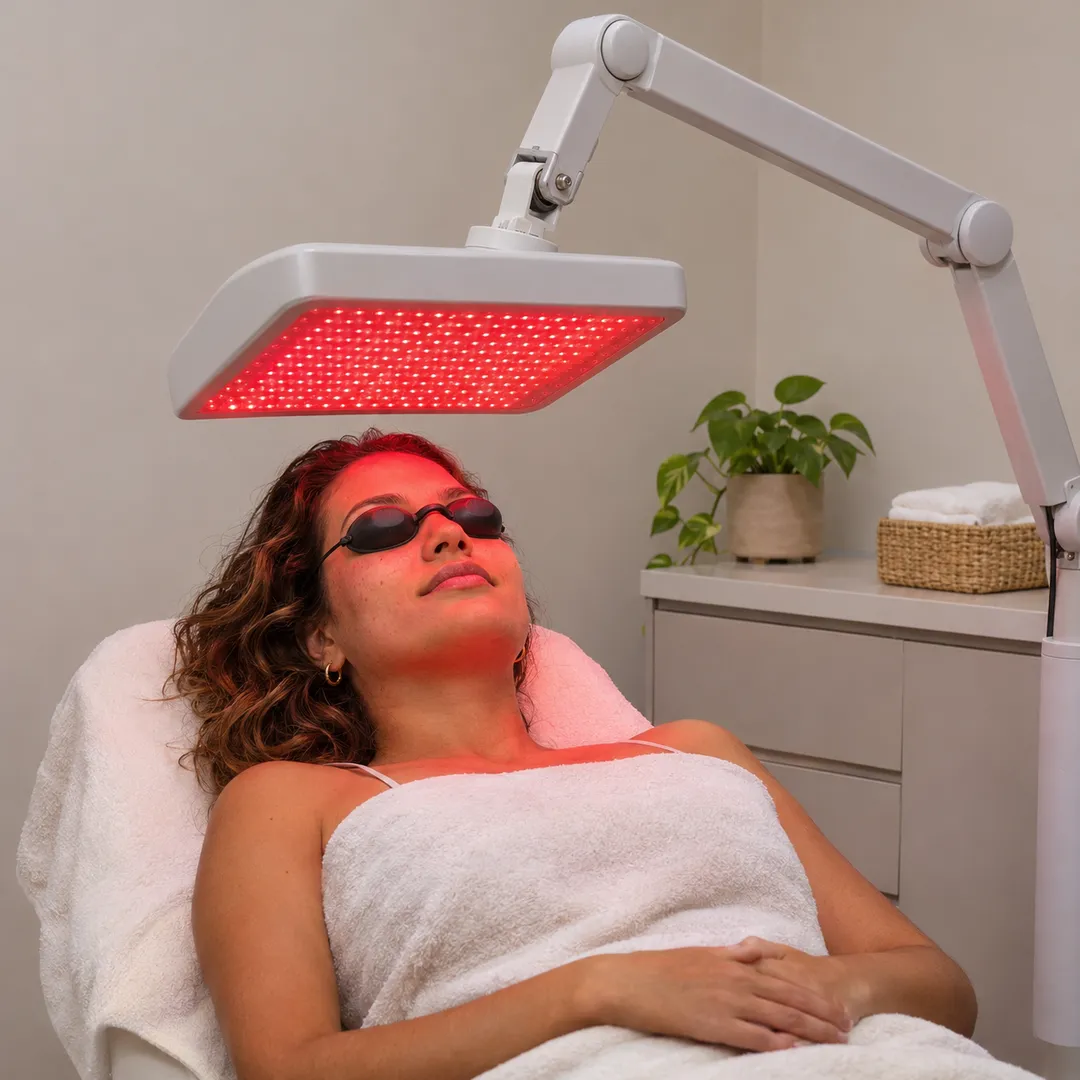
Red light therapy for skin means devices that aim red or near-infrared light at the skin. This page covers what a result depends on and what to ask about upkeep before paying for a first session.
What the result depends on
Harvard Health Publishing describes it this way: "Known medically as photobiomodulation and previously called low-level laser light therapy, it involves using devices that emit red or near-infrared light aimed at the skin." A device-based result starts with the device, so ask which light is used, where it is aimed and for how long.
Cleveland Clinic's acne overview is the place to read about acne itself, for readers who are asking about light because of breakouts.
The upkeep schedule to ask for
Before booking, ask for the full plan in writing: how many sessions, how far apart and what happens after the last one. A plan with no end date has a bill with no end date.
The American Society of Plastic Surgeons has a page on laser hair removal, another treatment that is built on a device and a schedule.
When a result fades late
Go back to the plan. Compare the sessions that were scheduled with the sessions that took place, and note any change in daily skin care over the same stretch. The gap between the plan and what happened is the first place to look.
Cleveland Clinic's page on anti-aging skin care ingredients and routine covers the home routine that sits alongside any device.
What keeping the result costs
Add the first session to every session after it, plus the products used at home, and divide by the months the result lasted. That figure is the cost of the result, and it is the one to compare across treatments.
A sensible next read is retinoid creams for aging skin, a home option with a schedule of its own. Ask for the red light plan in writing, price it over the full stretch, and set it beside that cream before deciding. The wider routine is covered in an anti-aging routine that makes sense.